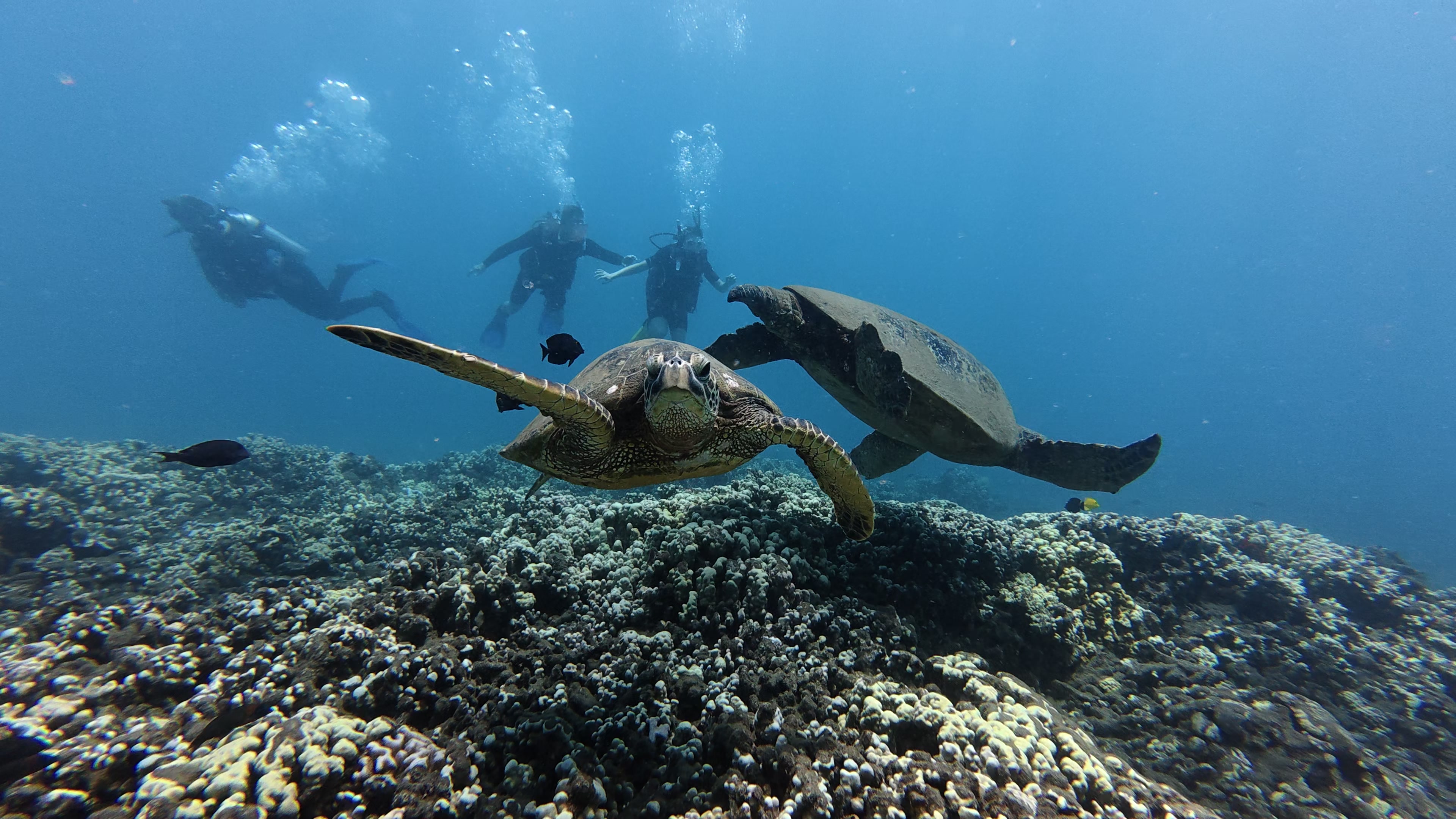
Turtle Town Maui: Your Guide to Diving with Sea Turtles off Kihei's South Maui Shore
There is a stretch of reef off the South Maui coast that locals call Turtle Town, and the name does not oversell it. Hawaiian green sea turtles, known in Hawaiian as honu, gather here in numbers you don’t see at most dive sites. They rest on the coral, cruise the sandy bottom, and surface for air with a calm that suggests they’ve long stopped noticing the divers watching them.
Turtle Town is not a single pinpoint on a map. It’s a loosely defined area along the Kihei coastline that includes several reef structures where turtles congregate consistently. Accessible by shore dive or boat, at depths that work for open water certified divers and beginners alike, it has become one of the defining experiences of scuba diving in South Maui.
This guide covers where Turtle Town is, how to dive it, what you’ll see, and what you need to know before you get in the water.
What Is Turtle Town and Where Is It?
Turtle Town refers to the reef systems along the southern stretch of Kihei and into Makena, particularly around Maluaka Beach, Five Graves, and the offshore reefs near Nahuna Point. These areas share a common feature: the reef topography and water temperature create ideal resting habitat for honu, and the turtles have claimed them accordingly.
The area sits on the leeward side of Maui, which means calmer conditions than the windward coast and the reliable visibility that makes South Maui such a consistent diving destination. On most days, you can expect 50 to 80 feet of visibility on these reefs. On exceptional days it stretches further.
You do not need a boat to dive Turtle Town, though boat access opens up the offshore sections that shore divers can’t easily reach. Scuba Shack runs both shore dive operations and boat charters that cover this area, depending on what you’re after.
The Main Dive Sites in Turtle Town
Several distinct entry points and reef sections make up what divers broadly call Turtle Town. Here’s how they compare:
Maluaka Beach (Turtle Town proper)
- Access: Shore or boat
- Depth: 15 to 50 feet
- Best For: All certified levels, snorkelers too
- Turtle Activity: Consistently high. This is the spot.
Five Graves / Makena Landing
- Access: Shore
- Depth: 20 to 60 feet
- Best For: Certified divers comfortable with entry on rocks
- Turtle Activity: High, plus dramatic topography and eels
Nahuna Point (Five Caves)
- Access: Shore or boat
- Depth: 25 to 70 feet
- Best For: Intermediate and advanced divers
- Turtle Activity: Good, with lava arches and caves to explore
Offshore Reef Sections
- Access: Boat only
- Depth: 30 to 80 feet
- Best For: Experienced divers wanting bigger formations
- Turtle Activity: Excellent, with less diver traffic
The Turtles: What to Expect Underwater
Hawaiian green sea turtles are the most commonly seen turtle species in Hawaiian waters, though hawksbill turtles also appear here on occasion. Honu are listed as threatened under the Endangered Species Act, and Hawaiian waters have become one of the strongest recovery stories for the species in the Pacific.
On a typical dive at Turtle Town, you can expect to encounter multiple turtles within the first few minutes. They rest on flat coral heads with their eyes half-closed, looking like they have nowhere to be. They surface predictably, coming up for air roughly every few minutes depending on activity level, and return to the same resting spots time and again.
Younger turtles tend to be more active and curious. Larger adults are more settled. Both are worth watching. If you stay still and let them come to you, they often will.
A few things worth knowing before you dive:
- Federal law prohibits touching, harassing, or chasing sea turtles. The minimum approach distance is six feet. Most turtles will close that gap on their own if you give them the chance
- Turtles surface to breathe, so keep an eye on the water column and don’t hover directly above them when they’re resting
- Morning dives tend to have calmer conditions and more active turtles
- Cleaning stations, where small fish pick algae and parasites off the turtles’ shells, are scattered through the reef. If you see a turtle hovering motionless with its flippers spread, it’s probably at one
What Else You’ll See at Turtle Town
The turtles are the headline, but the reefs here hold a lot more marine life worth paying attention to:
Hawaiian Green Sea Turtles
- Resting on coral heads, cruising the sandy bottom
- The main attraction. Patient divers get the best encounters.
Whitetip Reef Sharks
- Resting on sand at the base of the reef, typically deeper sections
- Common at Five Graves and the offshore sections. Relaxed, not aggressive.
Moray Eels
- Inside coral heads and lava crevices throughout the reef
- Yellow margin and undulated morays are the most common species here.
Octopus
- Tucked into rock crevices, often with shells piled outside
- Look for color changes and jet propulsion. Easy to miss if you’re moving fast.
Hawaiian Reef Fish
- Everywhere: coral heads, sandy patches, water column
- Parrotfish, wrasse, triggerfish, butterflyfish. High density and variety.
Eagle Rays
- Passing through the water column, often near sandy bottom edges
- Not guaranteed but regular enough to keep watching the blue water around you.
Shore Diving vs. Boat Diving Turtle Town
Both options work well. The right choice depends on your experience level and what you want out of the dive:
Shore Diving
- Entry: Moderate. Some sites require a rocky entry that takes confidence
- Depth Range: Shallower, typically 15 to 60 feet
- Turtle Encounters: Excellent at Maluaka and Five Graves
- Flexibility: Go at your own pace, repeat the dive anytime
- Best For: Certified divers comfortable with shore entries and self-guided diving
Boat Diving
- Entry: Easy. Giant stride or backroll from the boat
- Depth Range: Deeper sections accessible, 30 to 80 feet
- Turtle Encounters: Excellent, with access to offshore sections and less diver traffic
- Flexibility: Structured trip with a second tank option at a different site
- Best For: Anyone wanting a guided experience, larger formations, or a two-tank day
If you’re new to shore diving in South Maui, our Shore Dives in South Maui guide walks through the best entry points and what to expect at each site. For boat options, our Boat Dive Sites from Kihei guide covers the full range of what’s accessible from the Kihei Boat Ramp.
Best Time to Dive Turtle Town
Turtles are present at Turtle Town year-round. Unlike whale season, there is no off period for honu encounters. The reef is active in every season, and water temperature stays between 74 and 80 degrees Fahrenheit throughout the year.
That said, conditions do vary:
- Summer (June through September) brings the calmest seas and warmest water. Visibility is good and the reef is active. Also the busiest time for visitors, so popular sites see more diver traffic
- Winter (December through March) adds humpback whale season to the mix. Conditions on the leeward side remain manageable, and you may hear whale song through the water during your dive. Visibility can be exceptional
- Spring and fall are often the sweet spot: fewer crowds, stable conditions, and consistent turtle activity
Morning dives are almost always better than afternoon. Calmer water, better light penetration through the reef, and turtles that have settled in after their overnight feeding tend to make for more relaxed encounters.
Getting Ready to Dive Turtle Town
Open Water certification is the baseline for scuba diving at Turtle Town. The depths and conditions are appropriate for newly certified divers, and the turtle encounters are exactly the kind of experience that makes people glad they got certified.
If you’re working toward your certification, our guide to PADI Open Water Certification in Kihei covers the full process from start to finish. Scuba Shack runs certification courses with open water dives right here in South Maui, so you can train in the same water where you’ll eventually be diving with turtles.
What to have ready before you go:
- C-card and dive log if diving with a shop or charter
- Wetsuit (3mm is comfortable year-round in South Maui)
- Reef-safe sunscreen only
- Underwater camera if you have one. The light at Turtle Town makes for some of the best turtle photography in Hawaii
- A willingness to move slowly. The best turtle encounters go to the divers who aren’t in a rush
Scuba Shack has full gear rental available if you don’t have your own equipment. Stop in before your dive and we’ll get you sorted.
More Diving from Kihei and South Maui
Turtle Town is one of the best reasons to dive South Maui, but it’s far from the only one. Within a short distance of Kihei you have Molokini Crater, some of the best shore diving in the state, night dives that show you a completely different side of the reef, and boat charters to sites like the Lanai Cathedrals and the Carthaginian Wreck.
If you want to go deeper on what’s available, our Molokini Crater Dive Guide and Boat Dive Sites from Kihei cover the offshore options. Our Night Dives in Maui guide is worth reading before your next evening dive. And our Shore Dives in South Maui guide maps out the best accessible sites close to Kihei.
Come see us at Scuba Shack in Kihei before your next dive. We know these reefs well, we run guided dives and charters to Turtle Town, and we can point you to exactly the right spot for wherever you’re at in your diving. Walk-ins welcome.